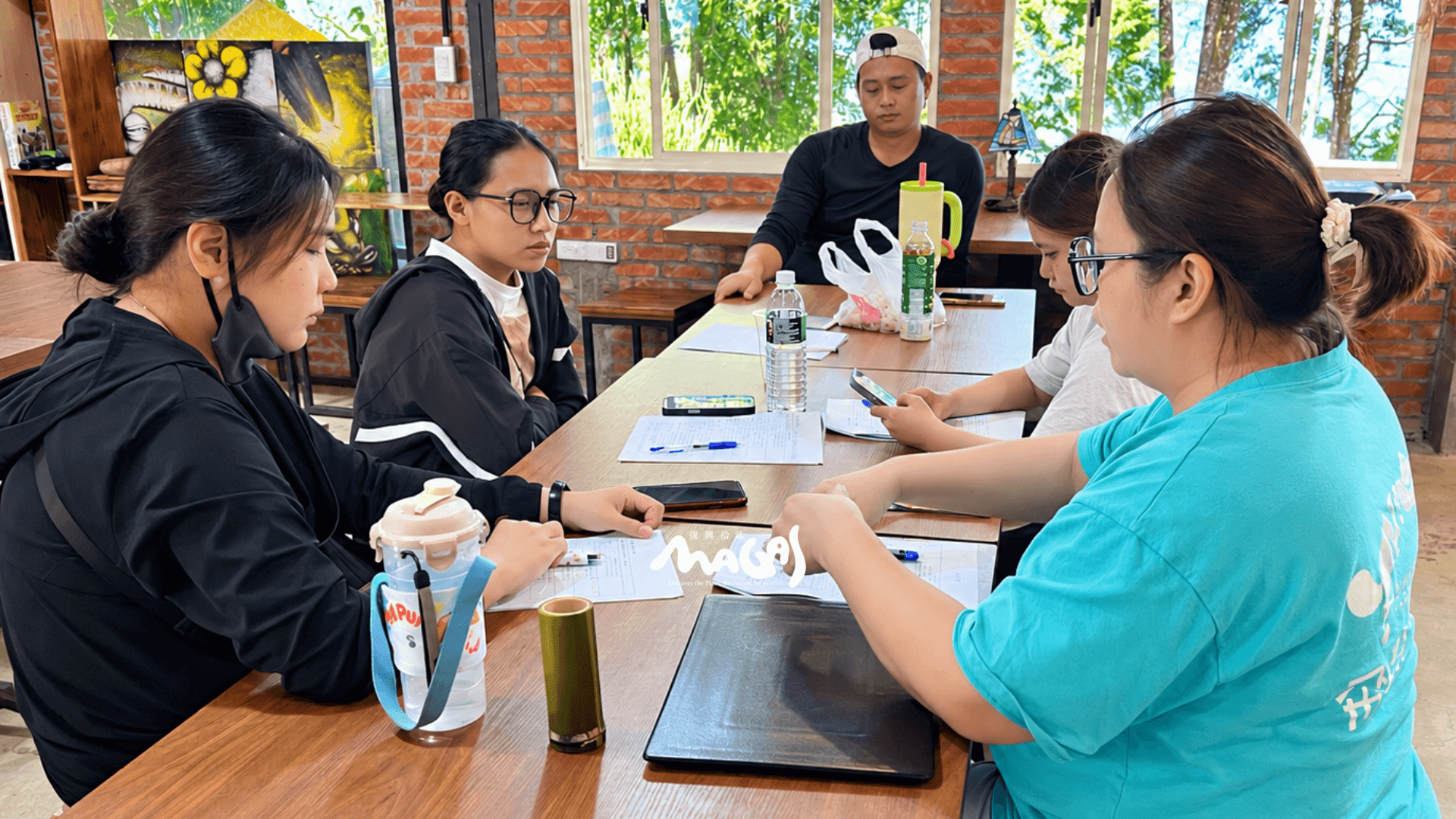
The table holds schedules, notes, and details still being adjusted. Relationships with a place are not built in one or two visits.
Youth Return / Youth Action
More Than a Meal | Building a Sustainable Journey in sbunaw, One Relationship at a Time
From the One-Day Fisherman to Laqi na Tayal in sbunaw, the experiences are gradually taking shape. What remains is not simply finishing an itinerary. It is about walking through the entire journey as a visitor would — arrival, welcome, participation, cooking, sharing a meal, and bringing the day to a close.
sbunawsbunaw
Local Relationships Are Not Built in One or Two Visits
The table is covered with notes, phones, schedules, and details still being adjusted.
This is not the first discussion, and it will not be the last.
A place-based journey is not complete when an itinerary is written.
It becomes real only when local people and visitors have actually lived through it.
Relationships with a place are not built in one or two visits.
They require time, repeated encounters, adjustment, and the willingness to return to the same table and keep working together.
Place-based work is not simply about completing a task.
What matters is whether, after the second, third, or many later encounters, people still choose to continue together.
Designing With sbunaw, Not For sbunaw
PLUWFUN's role is not to arrive with a finished experience and ask local people to execute it.
The work is to create a process in which different people can shape the experience together.
Young people understand the realities of living here.
Elders carry knowledge of language, plants, food, and memories of the land.
The PLUWFUN team helps connect these with visitor experience, cultural interpretation, content design, digital tools, and the practical realities of running a journey.
Some dishes need to be tested more than once.
Some problems only become visible after the full experience is rehearsed.
Some cultural stories require repeated conversations before everyone understands how they should be shared.
Design is not about reshaping a place into what we want it to be. It is about working together until a place finds a way of sharing itself on its own terms.
This is also how we understand sustainability.
It is not about producing a perfect solution once. It is about helping local people gradually gain the ability to decide how their place should be understood, shared, and carried forward.
Shen-Xin: Growing From Participant to Local Experience Builder
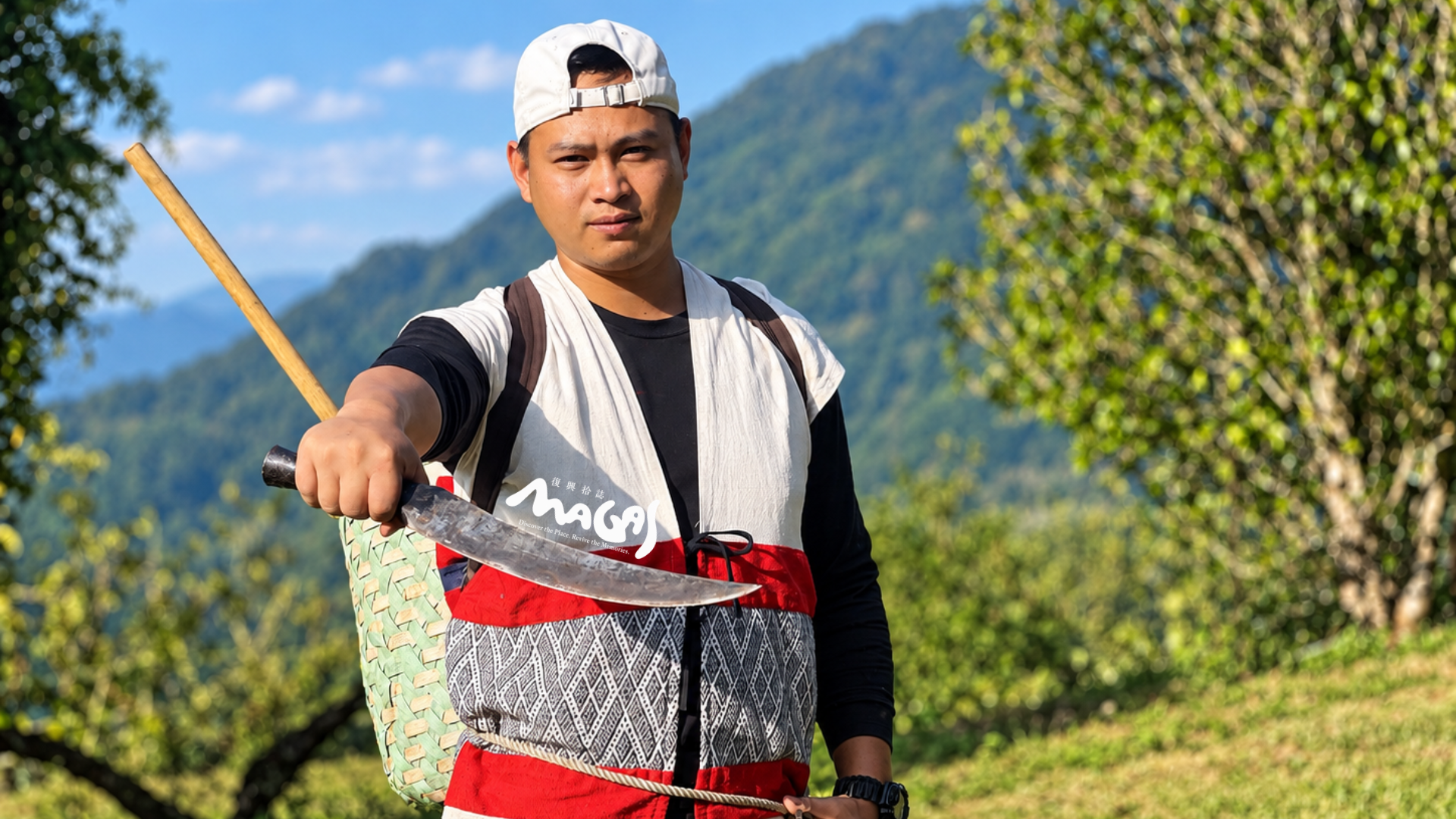
Shen-Xin, a young person from sbunaw, is part of this process.
The role is not simply to help serve a meal.
Local ingredients, cooking methods, the visitor journey, interaction, and the ability to introduce the place are all part of the capacity being gradually built.
Local young people build the ability to guide, interpret, and run an experience, starting from participation.
This is where sustainability becomes very concrete.
If every experience depends on outsiders coming in to run it, an event may end without leaving much behind.
The long-term goal is different.
Local young people should gradually be able to guide, interpret, and run experiences themselves, while working alongside elders.
When young people become capable of turning the culture, landscape, and everyday life they know into an experience visitors can genuinely enter, culture is no longer only being preserved.
A new generation is gaining the ability to carry it forward.
As these experiences become more established, the knowledge, time, and labour contributed by local young people and elders should also have the opportunity to receive fair value.
Sustainability means a place gradually gaining the ability to continue on its own.
A Meal That Begins With the Land
This rehearsal returns to a simple question:
How much of the meal in front of a visitor actually comes from this place?
Some of the vegetables used in this rehearsal were grown in sbunaw.
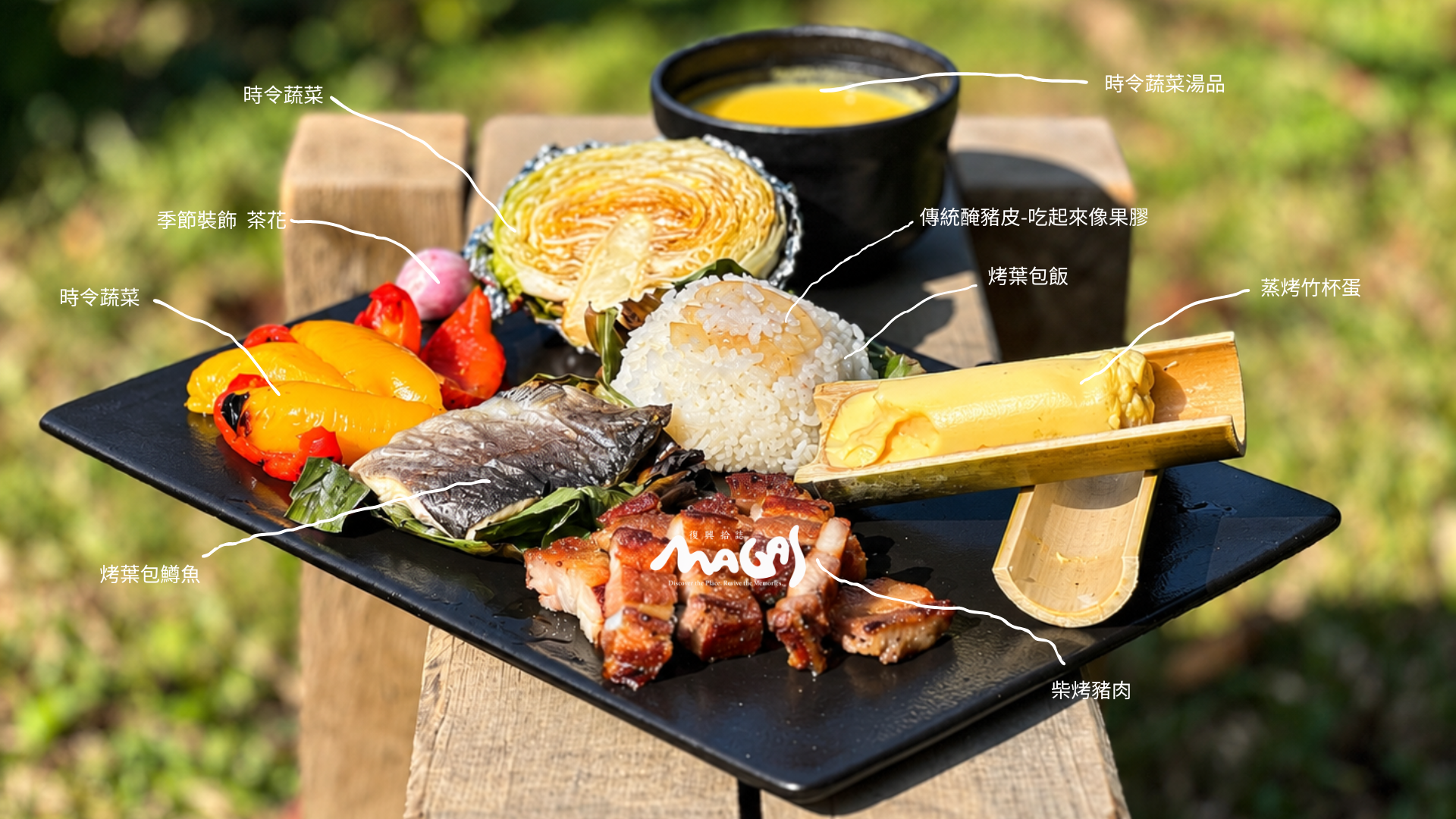
Locally grown pumpkin becomes soup.
Trout is not simply served as a finished dish. In the full experience, it becomes part of what visitors can learn to prepare themselves.
With local guidance, visitors are also intended to learn about and carefully gather suitable plants, including leaves and red berries locally referred to as zhuangyuan-hong, before bringing them back into the cooking process.
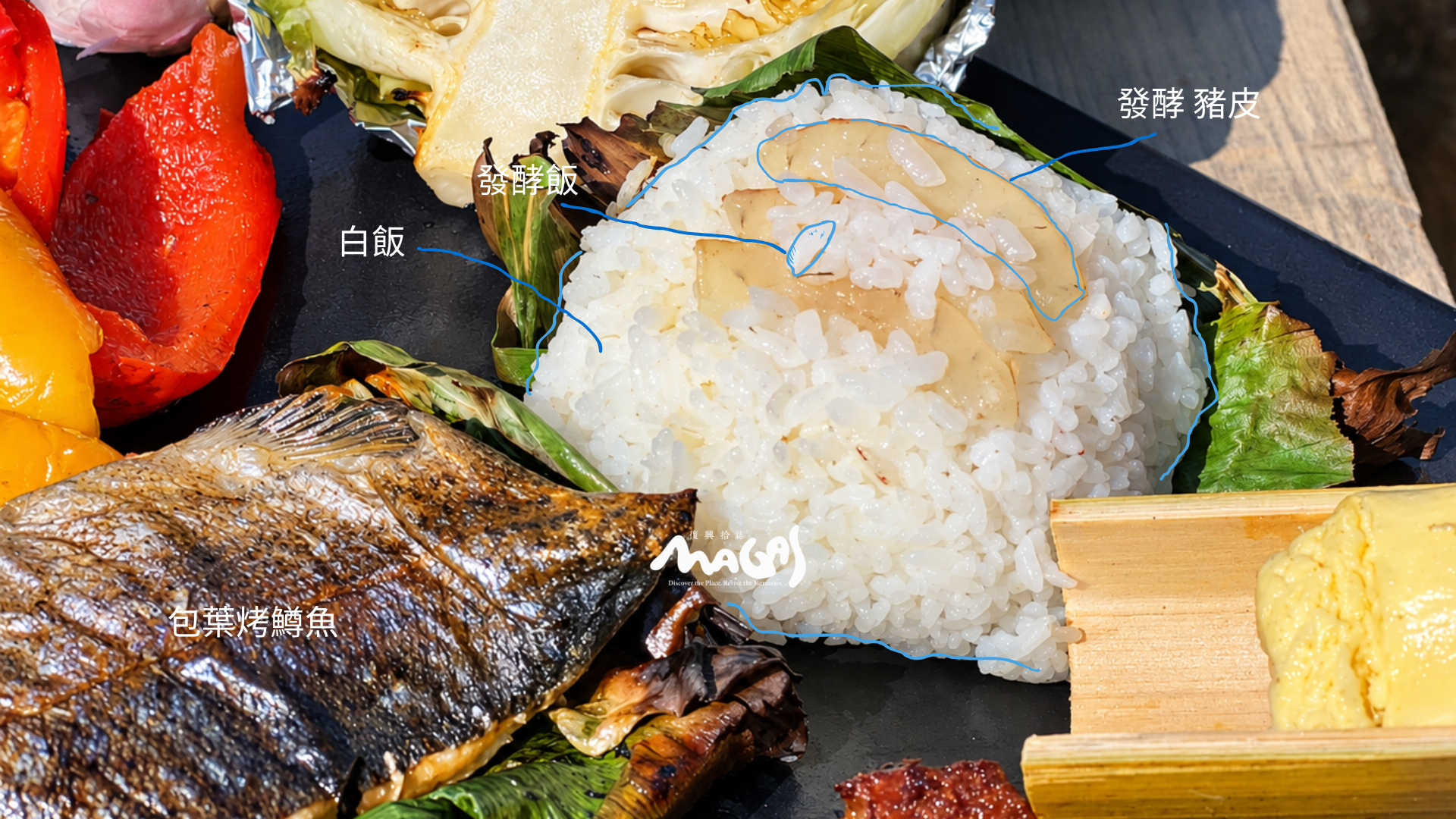
A rehearsal meal at one table: pumpkin soup, leaf-wrapped trout, rice, and bamboo-cup steamed egg.
Local ingredients are not added at the end simply to make a meal appear “local.”
Learning where an ingredient comes from, touching it, gathering it, preparing it, and eventually eating it are all part of the experience.
The journey from land to table becomes part of the travel experience itself.
Some Things Stay With You Because You Made Them Yourself
One part of the experience invites visitors to season trout.
Wrap it in leaves, secure it with vine material, and cook it over fire.
The trout is wrapped in leaves and secured with vine material.
Opening the leaf parcel shows the dish shaped by fire and leaves.
Another leaf-wrapped rice dish combines rice with Tayal-style fermented pork skin.
As it is heated, the pork skin softens into a tender, gelatinous texture, carrying a light fermented aroma and gentle acidity.
That acidity is not spoilage.
It is part of the flavour created through fermentation.
There is also bamboo-cup steamed egg, intended to be cooked with fire on site.
Here, fire is not scenery.
Leaves are not decoration.
When visitors have actually wrapped a fish, opened a leaf parcel, and experienced the smell of leaves and fire themselves, the place is no longer something they have only been told about.
They begin to understand it physically.
This is also part of sustainable travel:
participation creates understanding, and understanding can grow into respect.
Tradition Can Continue in Contemporary Forms
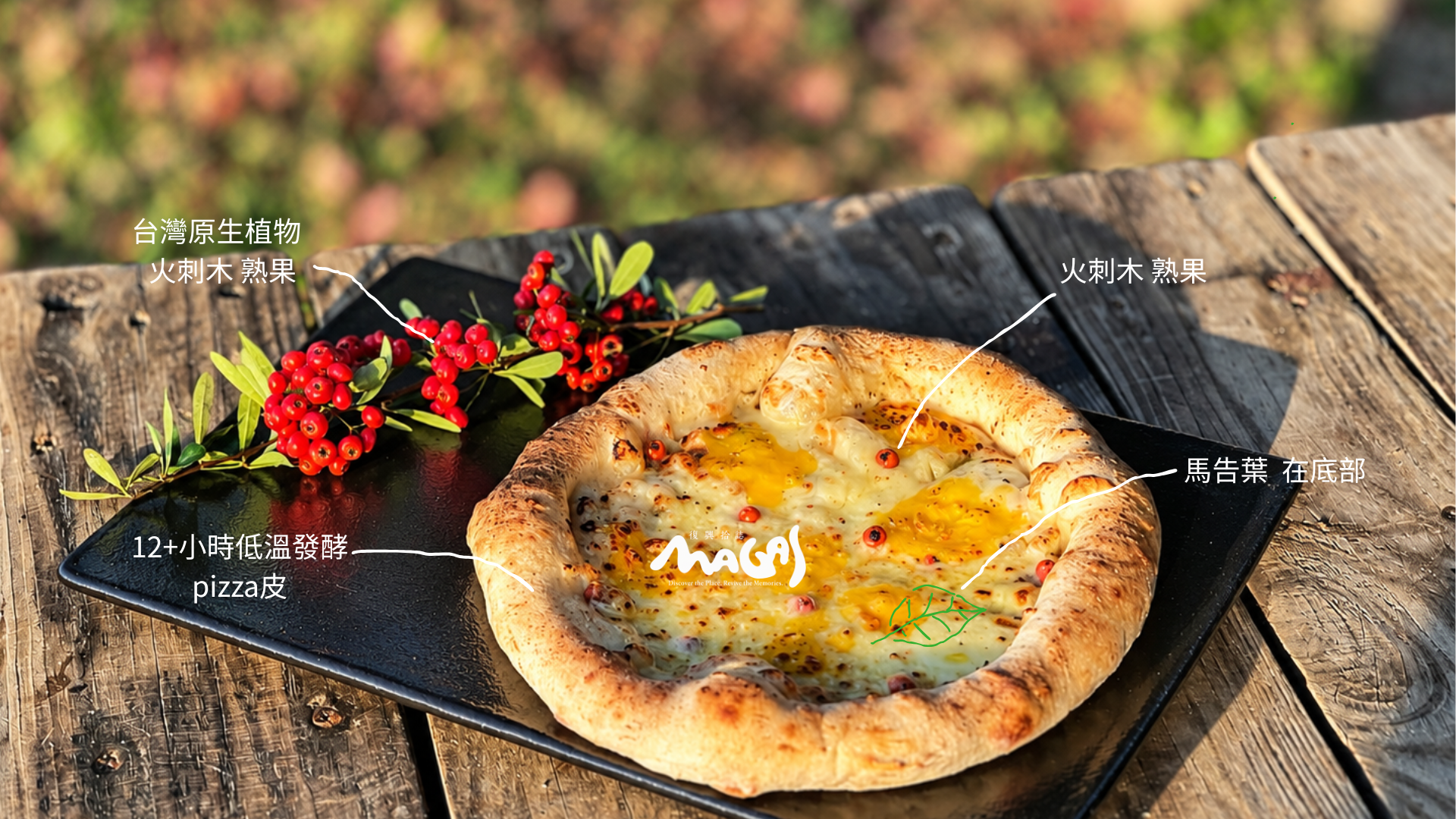
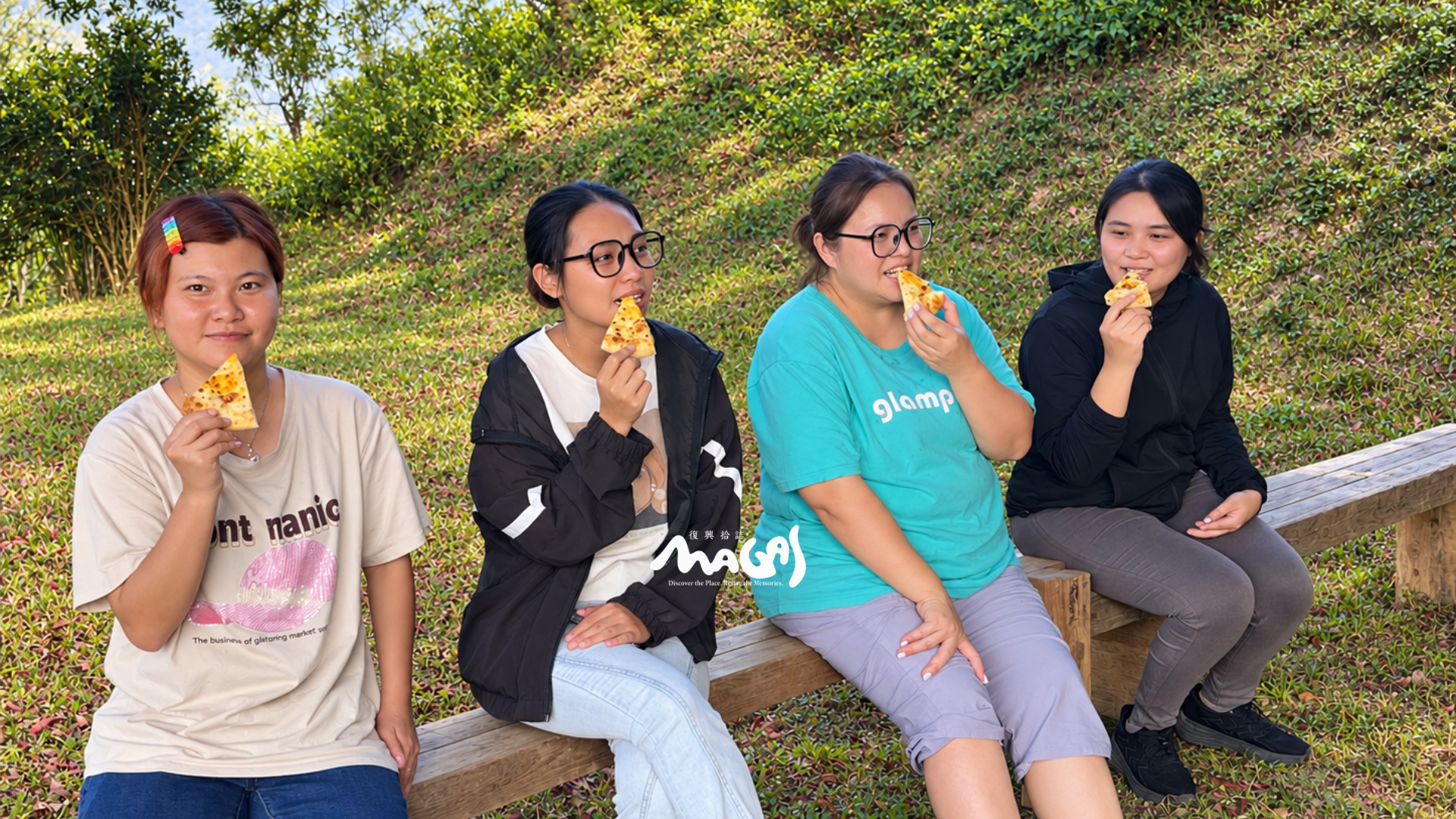
Pizza also appears on the table.
The dough is cold-fermented for more than 12 hours, then combined with gathered plants and local elements in a contemporary form.
Cold-fermented for more than 12 hours, then combined with gathered plants in a contemporary form.
This matters.
Cultural sustainability does not require every dish to reproduce the past exactly.
If culture exists only on interpretation panels, in written histories, or in fixed representations, it can slowly become disconnected from everyday life.
When young people understand local plants, food, and everyday knowledge, then find ways to use them in the present, culture remains active rather than frozen.
Keeping culture alive is not only about preserving the past. It is about giving it a role in the present.
Sustainability Also Means Being Honest About Where Food Comes From
Not every ingredient currently comes from sbunaw.
Confirmed local inputs include some vegetables, pumpkin, trout, and local plants.
Bell peppers, eggs, pork, and some other necessary ingredients still come from outside the community.
Seeing each item clearly is the start of knowing what comes from the place and what still comes from outside.
The team does not want to describe the meal as “100% local” when it is not.
Sustainability is not about making ourselves sound perfect.
It begins with knowing where each ingredient comes from.
From there, the questions become:
What can gradually be sourced locally?
What spending can return to farmers and local suppliers?
Where can supply chains become shorter?
Which ingredients still need to come from outside?
Clarity comes before claims.
For PLUWFUN, sustainability is not a label.
It is a process that can be examined, adjusted, and improved over time.
Elders Must Have a Place in the Present
Local elders are also intended to be part of the full visitor experience.
Tayal-language welcomes, knowledge of plants, food memories, and local stories are not there to create a cultural performance for visitors.
Elders are the people who carry that knowledge.
When elders speak, young people learn, and visitors are willing to listen, culture is not simply displayed.
It continues to be used.
That is an important part of cultural sustainability.
For a place, transmission is not only about preserving a record.
It is also about giving young people and elders opportunities to work together.
When young people gradually turn what they learn from elders into their own understanding, and then guide another visitor into the place, knowledge begins to move across generations.
As the experience grows, this knowledge, participation, and labour should also become respected and fairly valued local roles.
Five Forms of Sustainability at One Table
A visitor may see only a meal.
Behind that meal are five forms of sustainability.
Land — bringing local produce, plants, and ingredients into the visitor experience.
Culture — keeping language, food knowledge, and everyday practices in use.
Youth — enabling young people to grow from helpers into local experience leaders.
Elders — ensuring knowledge holders continue to have a meaningful and valued role.
Local economy — allowing visitor participation and spending to support local youth, elders, farmers, ingredients, places, and services.
A place-based experience is not sustainable simply because visitors enjoyed it.
What matters is what remains after they leave.
Did the place gain more capacity?
Did new relationships form?
Did more value stay with local people?
For PLUWFUN, sustainable travel is therefore about more than reducing environmental impact.
A journey becomes sustainable when, after the visitor leaves, the place is left with more capacity of its own.
The Process of Adjustment Is Part of the Work
Some flavours are not right the first time.
Some flavours are not right the first time. Eating and talking together shows what needs to change.
Some problems only appear after the entire experience has been rehearsed.
Some cultural content takes more time to discuss and confirm.
Some young people may only begin to believe they can lead after participating again and again.
Trust works in the same way.
It does not automatically appear after the first visit or first collaboration.
It grows through repeated encounters, keeping promises, solving problems together, and continuing even when things need to be changed.
That is why the most valuable result of place-based work is rarely getting everything right on the first attempt.
It is returning for the second, third, and many later attempts — and still choosing to work together.
To eat together.
To discuss.
To adjust.
And slowly turn an idea into something the place itself can continue to carry.
Next Time, Take a Seat at This Table
A visitor arriving in sbunaw may see a fish, a leaf, a fire, and a shared meal.
Behind them are people who have spent a long time learning how to turn their place into something they can share on their own terms.
What reaches the table is more than food.
It carries relationships with the land, knowledge held by elders, abilities being built by young people, and a local community finding its own way forward.