
Community / Tribal Stories
Not Technology Dropped Into the Countryside | Sbunaw and NCCU USR Slowly Grow Their Own Digital Resilience
From “Grocery Store 2.0” and the on-the-way economy to a tribal unstaffed store: a digital co-creation experiment with no project budget and no rush to close, built slowly by teachers, students and the community together.
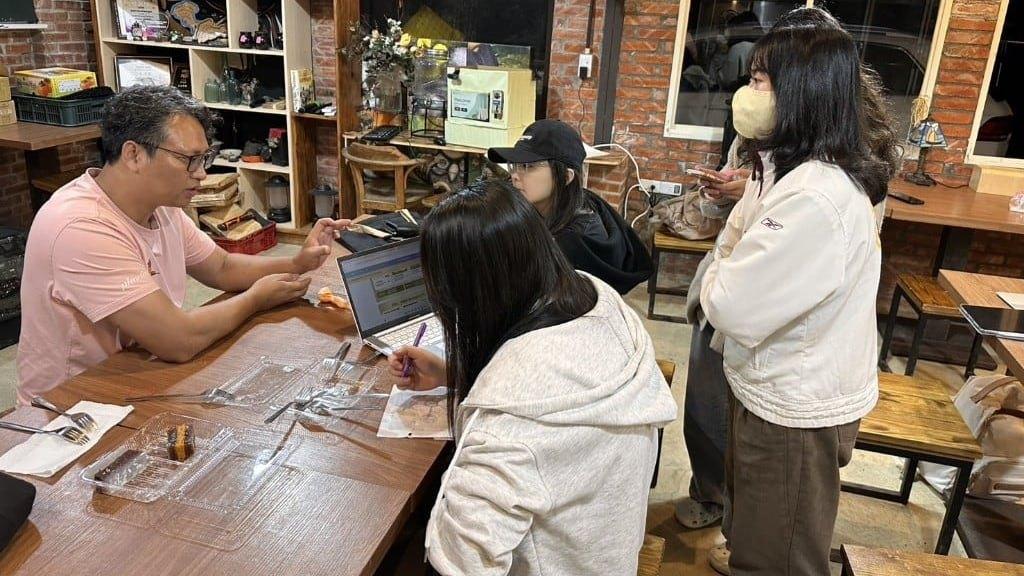
At first glance, it is hard to imagine that a cardboard-wrapped unstaffed store prototype, fitted with a screen, a camera and recognition equipment, has already been years in the making. Although the system may look rather basic, the students are actually working with a distinctly contemporary technology: Edge AI. It is not a product demo from a technology company, nor equipment bought with project funding. It began with a problem in one place. It started with Mr. Flying Squirrel thinking things through and building early tests on his own. He then brought those unfinished ideas to National Chengchi University (NCCU), where one teacher and a group of students gradually turned them into a shared experiment, carried forward by different disciplines and different generations. What we really want to build has never been just an unstaffed store. What we want to know is: If we design from the life of a tribal community, which digital technologies are truly worth keeping in a rural area?
01 | If We Only Chased Speed, This Might Have Been Finished Long Ago
This partnership is unusual. There was no development budget demanding that the unstaffed store be finished within a few months, and no contractor was hired to hand over a finished product and leave. Teachers brought their students in. Students took the information, design and technical skills they learned in class to a real place to test them, and the community handed them problems from real daily life. In the end, the students completed their coursework, and the community received version after version that it could build on. Some may say: Isn't that slow? With a new cohort of students every year, won't it fall short of professional standards? But what Mr. Flying Squirrel truly wants to build has never been the fastest-finished product. It is this: Can the community and the university first build a foundation of trust, one that is willing to work together over the long term? Because if the goal is only to finish one task, the relationship may end when the project does. But the digital applications rural areas really need cannot be found through a single round of development.
02 | Rural Areas Do Not Need a Scaled-Down Version of Urban Technology
Rural areas are not where a typical capital market most easily sees demand. Small populations, long distances, low usage density. If we measure only by how big the market is, a tribal community's needs may never reach the front of the line for technology investment. But a small market does not mean the problem is unimportant. Labor shortages, travel distances, inconvenient shopping, hard-to-reach services, differences in digital skills, and each place's own way of life mean that digital tools can create very direct value in rural areas. The catch is: We cannot simply move in technology that is already mature in cities. Because every place has its own rhythm of life. Some people are used to dealing with regular customers, some elders are unfamiliar with complex interfaces, children will reach out and touch the equipment, visitors come for the first time, and there are real limits on network, equipment, staffing and maintenance. These problems are hard to capture in a requirements specification alone. You have to step into local life before you slowly begin to see them.
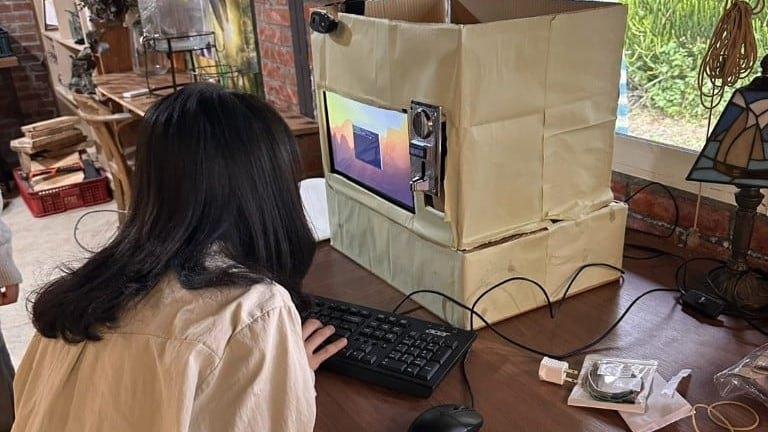
▲ The unstaffed store began not as a finished product but as a prototype that could be placed directly into a real setting for testing.
03 | The Dream Did Not Start at a University; the Community Tried First
It began with Mr. Flying Squirrel thinking first, looking for methods first, and trying to build something first. Not because he knew the answer. But because he knew the community had a problem. Later he brought these still-rough ideas to NCCU to share. Through one exchange after another, the teachers saw not a job of “building a machine for the community” but a problem that could bring different disciplines into a real place. Starting from the NCCU Office of University Social Responsibility (USR) project “Grocery Store 2.0: Reviving Old Shops — an On-the-Way Economy and Social Resource Integration Platform,” different teachers and students gradually joined in. A few years ago, Professor Jui-Huang Tsai (蔡瑞煌) took part in designing the on-the-way economy and service models for rural areas. Professor Tzu-Chieh Tsai (蔡子傑) and his students began working on experiments in unstaffed stores, equipment, networking and information technology. Professor Yi-Hui Lee (李怡慧) then joined the thinking from the angles of digital innovation, digital inclusion, ICT4D and digital resilience, to consider together: What technology can do and what technology truly suits a place are two different things. In the next stage, we also plan to connect with Professor Yi-Ling Lin (林怡伶), from the angles of human–computer interaction and information systems design. The question that truly matters began to shift from: “Is the feature finished?” to gradually becoming: “Will residents, elders, children or first-time users really be able to use it?”
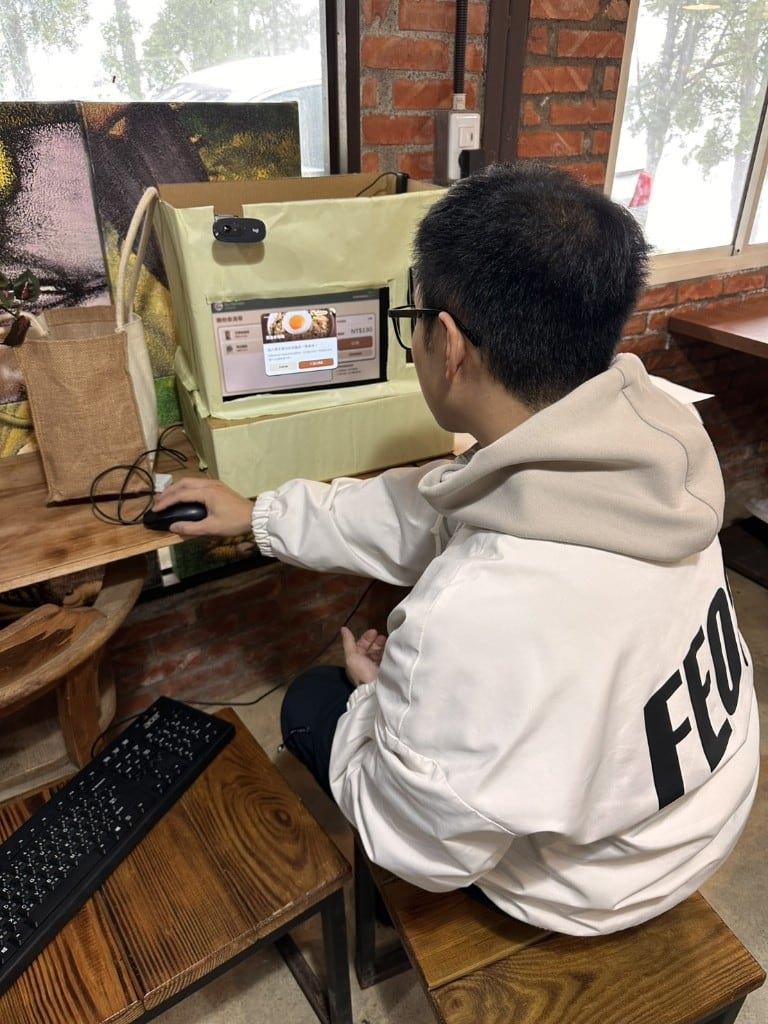
▲ From adults to children, real usage behavior points directly to where the interface and the flow still need to change.
04 | A Simple-Looking Machine Is Testing Many Things at Once
The equipment you see now has not been deliberately dressed up as a polished commercial machine. Cardboard, a screen, a camera, recognition equipment, a keyboard and a mouse, plus an interface that is still being adjusted. Sometimes students sit down and test it right there in Sbunaw. Sometimes they hold real drinks, instant noodles or other goods up to the camera. Someone operates, someone observes, someone spots a problem, and then they go back to campus to fix it. From product recognition, the operating interface and information display to the checkout flow and equipment integration, everything has to be used by real people. What is especially interesting is that when a child sits down in front of the machine, picks up a can of drink and starts using it, many problems that existed only in engineering discussions suddenly become very concrete. If a child cannot understand it, or an elder does not know where to press next, then even a fully featured system cannot yet be called a digital service that suits the community. So the real test is not: “Does the system run?” It is: “Can people use it naturally?”
05 | Students Are Not Free Engineers; They Help Knowledge Flow
Perhaps the most interesting thing about this partnership is that it has not followed the usual way of running a technology project. The students are not free engineers. And the community is not a case study handed out for homework. Students have to face a real-world problem with no standard answer. The community, for its part, offers its time, its setting and its everyday experience, so that students understand: A system is ultimately not there to be graded by a teacher. Someone will really sit in front of it and use it.
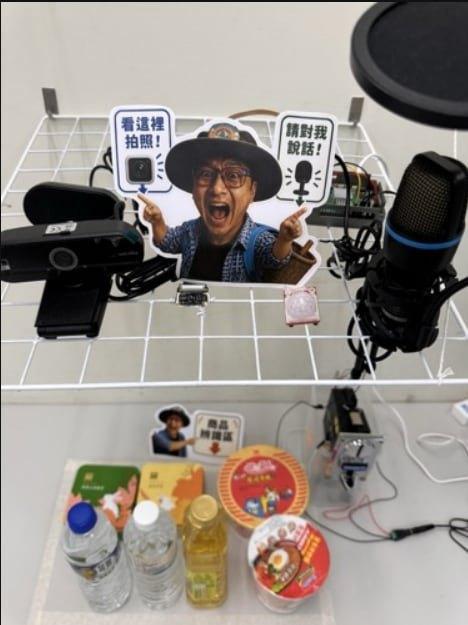
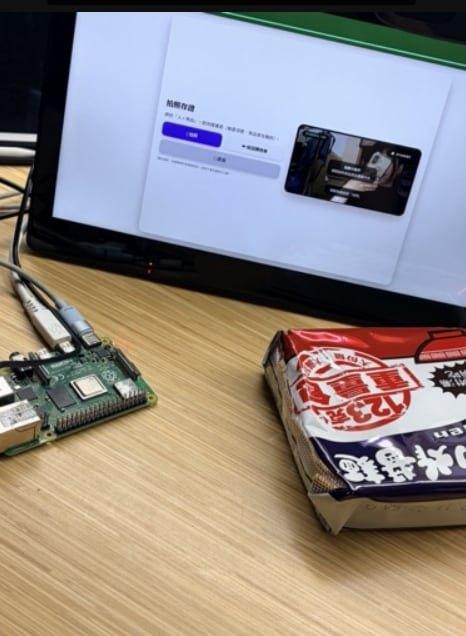
▲ A seemingly simple unstaffed store depends on imaging, equipment, product data and operating flow all working together.
Over these years, we have also started to see another important change. Students have started to learn how to hand work over. What one cohort leaves behind is not only code. It also includes test methods, open problems, documentation, and where the next step should begin. New students do not have to start from scratch every time. Development progress can now carry on. And the once-rough unstaffed store has, little by little, matured as a result. This may not be as fast as product development at a technology company. But it is starting to build another kind of capability: Knowledge can cross the boundary of a single semester and stay.
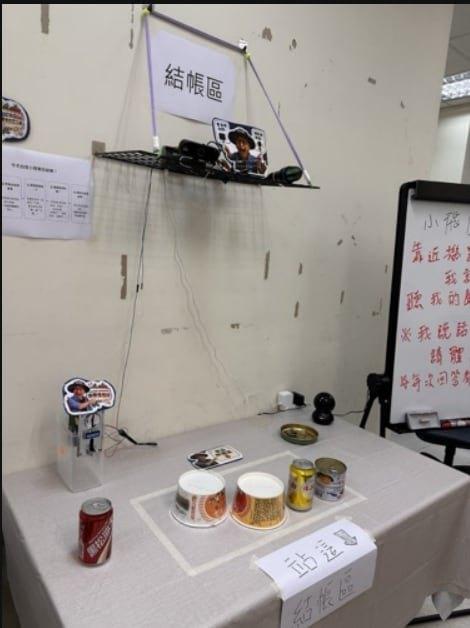
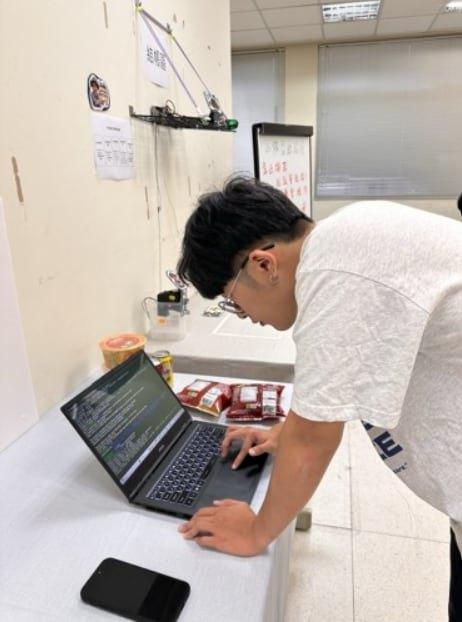
▲ Going from field tests back to campus to make changes, then bringing the new version back to the community, is how this system keeps moving forward.
06 | Slow Does Not Necessarily Mean Behind
The technology industry is used to describing innovation in terms of speed. MVPs, rapid validation, commercialization, scaling up. But if the setting changes to a rural area, a tribal community, a farming village or any place with a low population density, what matters may not be: “How big can we build in six months?” but: Three or five years from now, will anyone still know how to keep this going? Teachers change. Students graduate. Projects end. Funding will not last forever. So a place's real digital resilience is not only whether it can still get online when the network goes down. It also includes: When the original people have left, do the community and its partners still know how the system continues, how problems get found, how the next group takes over, and which features are truly worth keeping? Seen this way, what is happening in Sbunaw now looks more like a long-term Living Lab, a place where experiments happen in everyday life. It does not finish the answer in a laboratory first and then ask the community to accept it. Instead, it revises the answer again and again in real life.
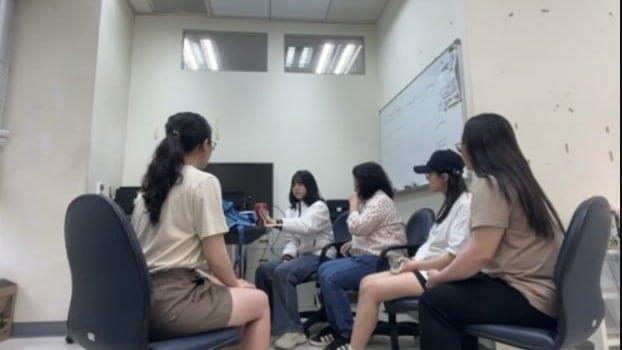
▲ The end of a semester does not reset the project to zero. How work is recorded, handed over and picked up by the next group of students is also part of digital resilience.
07 | From One Unstaffed Store, Another Scale of National Digital Resilience
Taiwan is now talking about digital resilience. At the national level, it covers communications, networks, backup, security, and the ability of rural areas to access digital services. But if we zoom in to tribal and local life, digital resilience has another scale: Can people keep using technology? Has the knowledge stayed? Can the community keep raising its own questions? When outside expertise leaves, does the relationship remain? This is why we are in no hurry to announce that “the unstaffed store is finished.” Because what we really want to build is not a piece of equipment. It is a way for communities, universities, students and technology to work together over the long term.
08 | Starting from Sbunaw, Could This Reach More Places?
The world is not only cities. There are also mountain regions, islands, Indigenous areas, farming villages, and many places where the population is shrinking. They share some similar problems: High service costs, scattered populations and labor shortages mean that many commercial services do not easily appear through the market alone. So the real future value of what is being tried in Sbunaw now may not be “copying an identical unstaffed store.” It may be whether we can distill a method: Technology does not have to be expensive. Systems can be handed over. Interfaces can adapt to each place. Universities can connect teaching with real problems. A community is not a subject to be studied, but a partner in posing the questions. If this gradually takes hold, what grows out of Sbunaw will be more than a local system. It could become something that can be shared with other rural areas, tribal communities and farming communities abroad: a place-based model of digital resilience.
09 | And It All Began with Someone Willing to Stay a Little Longer
Mr. Flying Squirrel has always been grateful to the Office of University Social Responsibility at National Chengchi University. In particular, Professor Ching-Ping Tang (湯京平) and Associate Professor Ya-Ping Wang (王雅萍) have kept pushing and supporting the work within the USR system, giving a community's still-immature idea the chance to enter NCCU again and again. So that different teachers could see it. So that different students could join. And so that Sbunaw could become a real-world site where things can be tested, fail, be corrected and move forward over a long time. For Mr. Flying Squirrel, what is truly precious is not: “NCCU built an unstaffed store for us.” It is this: Someone was willing to believe that a community's still-immature dream is also worth accompanying as it slowly grows up. There was no large development budget. There was no demand for commercialization within six months. But cohort after cohort of students and teacher after teacher have slowly helped the problem come into clearer view.
Closing | What We Really Want to Build Is Not Just an Unstaffed Store
In the future, this system will keep being revised. It may begin to link local products, on-the-way delivery, membership, travel, services for elders, local shops, community mutual aid, and even corporate ESG and more social resources. But those are only tools. What we really want to build is: A digital approach that lets rural areas keep using, adjusting and building on it by themselves. Technology should not take people out of a place. What technology should really do is keep limited human effort where people are needed most. And Sbunaw is slowly proving one thing: The scale of digital innovation is not necessarily set by the size of a market. Sometimes it should be set by a problem a place deserves to have solved.
Collaborators and Partners
Support and Program Platform
National Chengchi University, Office of University Social Responsibility (USR) “Grocery Store 2.0: Reviving Old Shops — an On-the-Way Economy and Social Resource Integration Platform”
Key USR Promoters and Implementers
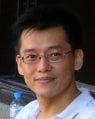

▲ From left: Professor Ching-Ping Tang (湯京平), Associate Professor Ya-Ping Wang (王雅萍) They help problems raised by the community keep flowing into the university, linking different disciplines, teachers, students and sites to build a foundation for long-term collaboration.
Digital Applications and Professional Collaboration
左右滑動看更多照片
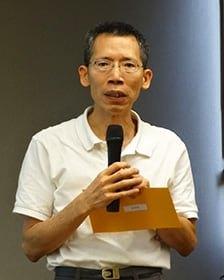
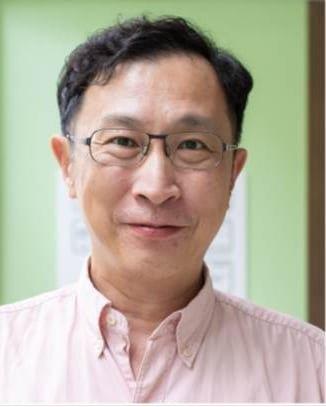
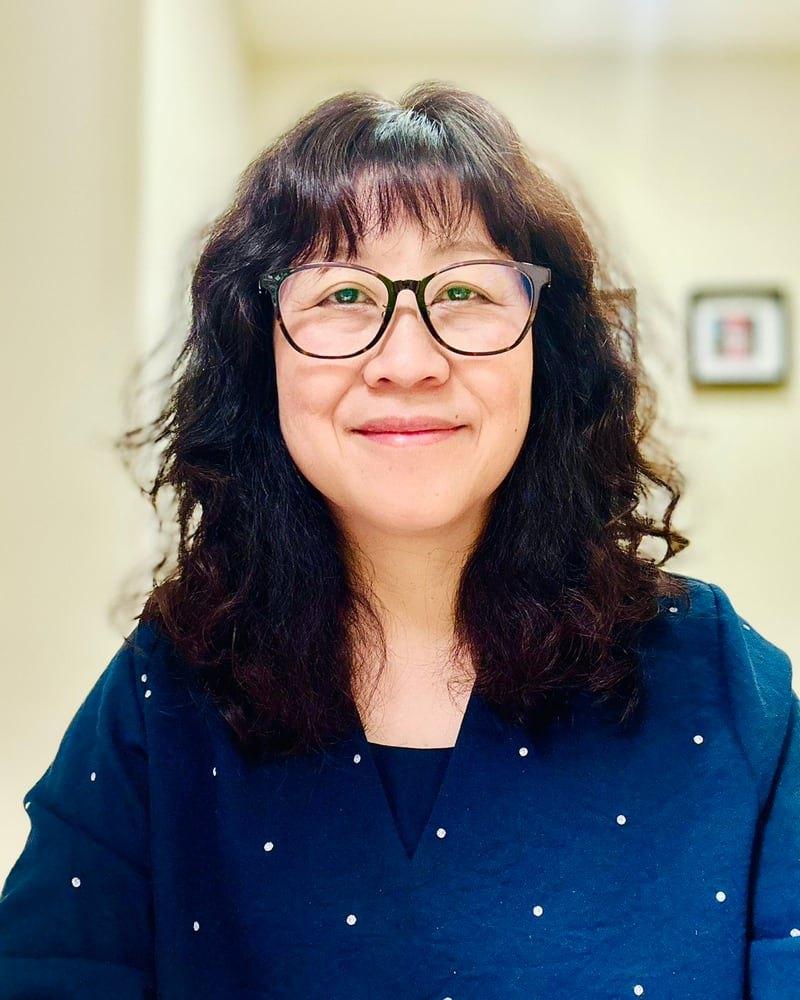
▲ From left: Professor Jui-Huang Tsai (蔡瑞煌), Professor Tzu-Chieh Tsai (蔡子傑), Professor Yi-Hui Lee (李怡慧) Professor Jui-Huang Tsai | Rural on-the-way economy, service innovation and digital application design Professor Tzu-Chieh Tsai | Unstaffed stores, IT equipment, networking and technical collaboration Professor Yi-Hui Lee | Digital innovation, ICT4D, digital inclusion and digital resilience
Planned Next-Stage Collaboration

▲ Professor Yi-Ling Lin (林怡伶) | Human–computer interaction, user experience and information systems design
Local-Side Initiator
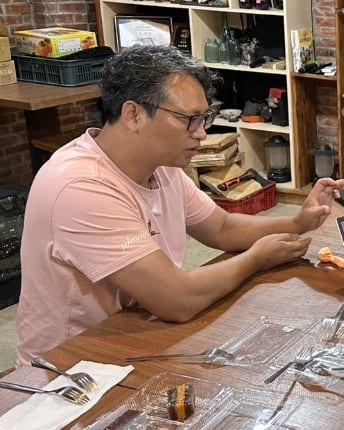
▲ Mr. Flying Squirrel | Local-side initiator, PLUWFUN
Teacher portraits are taken from the official faculty pages of NCCU departments.
Public record: 政大 USR「雜貨店 2.0 老店新開」計畫頁 / NCCU USR “Grocery Store 2.0” project page: https://usr.nccu.edu.tw/zh-tw/moeusr-1
本文由一起飛未來設計所 PLUWFUN 依地方端實作經驗整理。 / Compiled by PLUWFUN from local-side, hands-on experience.
Source type: Oral account
Photography: 現場照片由一起飛未來設計所 PLUWFUN 提供;教師肖像取自國立政治大學各系所官方教師頁 / Field photos by PLUWFUN; teacher portraits from the official faculty pages of NCCU departments.